Wednesday, September 12, 2012

Dress Windows with Voile Fabric

How to design your windows with voile fabric

  1. Measure your windows, and decide on the length of window dressing you want. When deciding on the length, you can opt to choose the length that ends just below the frame.
  2. Play with colors. You can visit a fabric store or check online for voile fabric swatches. Take note of the color and the texture that you want.
  3. A slim pewter rod with be ideal as hardware for your delicate voile fabric.
  4. Sew hems on the top, bottom and sides of your voile fabric if you're not using ready made ones. Make sure there is enough room in the top hem for your curtain rod.
  5. Combine voile with heavier drapes, if you'd like. Use two sets of rods and hardware, with the voile on the inside nearest the window, and the heavier drapes on the outside. This allows you to draw your drapes back and leave them that way for most of the day, even into the early evening, since the voile lets in light but does provide some privacy.
  6. Mix the colors and textures. Choose from a wide variety of voile fabrics online.

Tuesday, September 11, 2012

Curtains: Polyester Voile Fabric Characteristics

Curtains: Polyester Voile Fabric Characteristics

Voile curtains are very lightweight and can be almost transparent. It drapes and gathers very well. Here are some of the characteristics of polyester voile fabric:

Texture: Can be transparent. Good hand feeling.

Appearance: Elegant appearance with fine air permeability and drape.

Creativity: Can be embroidered, printed, and can be placed with W/R,W/P,PA/PU/PVC coating.

Functionality:

Sheer curtain fabrics are especially helpful when you need to brighten a room. Even when gathered together, the lighter curtain colours let in more light. By simply stretching out the fabric to minimize the gathering, you can brighten up a whole room. Sheer curtains are ideal for indoor plants because the voile protects them from direct sunlight yet provides enough light to allow them to grow.

Friday, September 7, 2012

Types of Broadcloth

There are different types of broadcloth.  Here the most commonly used:

Wool Broadcloth


The characteristics of wool broadcloth are slightly different from other broadcloth. It is usually twill with a two up and one down construction. The fabric is fulled after weaving. Fulling is a process where the cloth is cleansed, shrunk and thickened with moisture, heat and pressure. It has a napped face and is closely sheared and polished.


Cotton Broadcloth


Broadcloth cotton is possibly the most common type of broadcloth fabric today. The broadcloth cotton fabric is either made of 100% cotton or made of a blend of cotton and polyester or rayon.


Silk Broadcloth


Silk Broadcloth is a soft, lightweight silk with a cotton-like feel. It has a dull luster, with a flat, smooth surface. Holds creases well, and makes excellent tailored dress shirts and light blouses. Very easy to sew, doesn’t show pin marks.

Thursday, September 6, 2012

A Closer Look to Broadcloth Fabric

There are several types of broadcloth fabric and  can be made of cotton, cotton/polyester blends, silk or wool. But let us take a closer look at wool broadcloth.

Broadcloth (Wool) Characteristics

Wool broadcloth characteristic slightly differs from the other types. It is usually twill with a two up and one down construction. The fabric is fulled after weaving. Fulling is a process where the cloth is cleansed, shrunk and thickened with moisture, heat and pressure. It has a napped face and is closely sheared and polished.


Uses of Broadcloth

Broadcloth was first use in the medieval England during the 11th century. It was the best English cloth and being exported in Europe. In the modern times, wool broadcloth with its felted, velvet-like feel, has been a popular material for many years in furniture and luxury car interiors.


If you are interested in looking for wool broadcloth fabric varieties, you can check the wool broadcloth section of fabrics.net.


Wednesday, September 5, 2012

Broadcloth Designs

Wool broadcloth is often used for  jackets, mens formal, mens suits, womens suits and evening coats.

Here are some good designs which your tailor can use for your broadcloth.

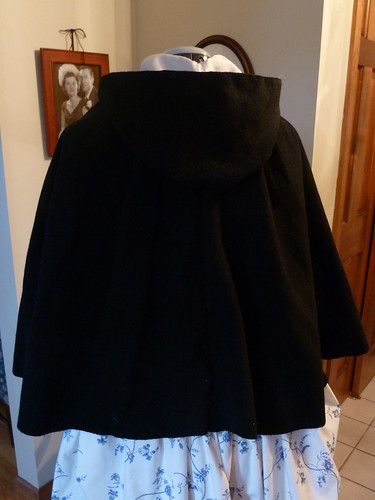
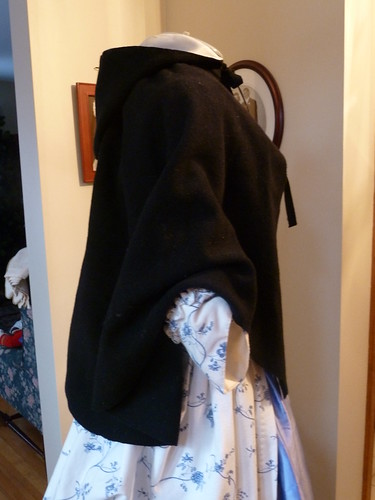
Black wool mantle

A mantle or short cloak made of black wool broadcloth. The pattern is taken from Linda Baumgarten's Costume Close-up, pgs. 50-53, and dates to 1760-1775.


Back view Image via Flickr


Side view Image via Flickr


Wool Trenchcoat

Tommy Hilfiger - Chloe Wool Trench Coat 


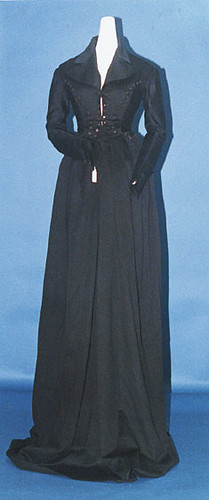
Wool Broadcloth Riding Suit

Black wool broadcloth; set of tailored jacket and skirt of appropriate length for horse riding.
Image via Flickr

Tuesday, September 4, 2012

What is a broadcloth?

Broadcloth defintion

Broadcloth is a dense woollen cloth. Modern broadcloth can be composed of cotton, silk, or polyester, but traditionally broadcloth was made solely of wool. The dense weave lends sturdiness to the material.

Other defintions of broadcloth

broadcloth | Define broadcloth at Dictionary Globala.Ru


Broadcloth Broad"cloth, n. A fine smooth-faced woolen cloth for men's garments, usually of double width (i.e., a yard and a half); -- so called in distinction from woolens three quarters of a yard wide. [1913 Webster] broadcloth n ...

Broadcloth as an all around Fabric - HomeTex.ca

(we added the latest broadcloth shade card at bottom). There are many different types of popular fabric leather, silk and denim are only some them. Broadcloth fabric is another type that is very durable, very soft and light ...

Monday, September 3, 2012

Fabric Care: Silk Organza


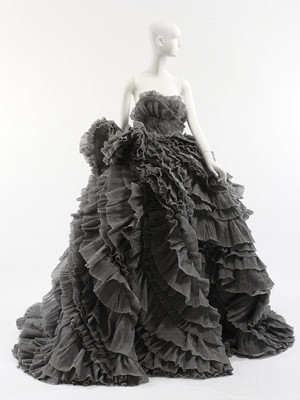
Image via Flickr

How to Care for Silk Organza?

Organza appears to be a delicate fabric, often found on prom dresses and wedding apparel, but it is actually a hardy material that can withstand high temperatures.


Instructions
  1. Wash the organza material at a warm temperature in your washing machine.
  2. Put the fabric in the dryer on a "tumble dry" setting. Set the temperature at low heat.
  3. Add a dryer sheet to eliminate static electricity. Organza's stiffness can create more static electricity than other fabrics. Turn on the dryer and leave the fabric in until the dampness is gone.
  4. Take the fabric out of the dryer as soon as it's dry. This will keep the fabric from becoming wrinkled.
  5. Iron the organza on a low heat setting to remove any wrinkles.
How to take care of the evening dress made of Organza /Taffeta ...


Organza has the gloss like glass. Meanwhile, it is easy to break as the glass. It is usually. used at the wedding dress, bridesmaid dress and flower girl dress. Since organza cannot. extend, it needs to be tailored properly.